Abstract:Options trading involves buying or selling rights to underlying assets at set prices. It requires an understanding of concepts such as 'the Greeks', various trading strategies, and options pricing factors. Proficient trading involves research, risk management, emotional control, and continuous learning due to market dynamics.
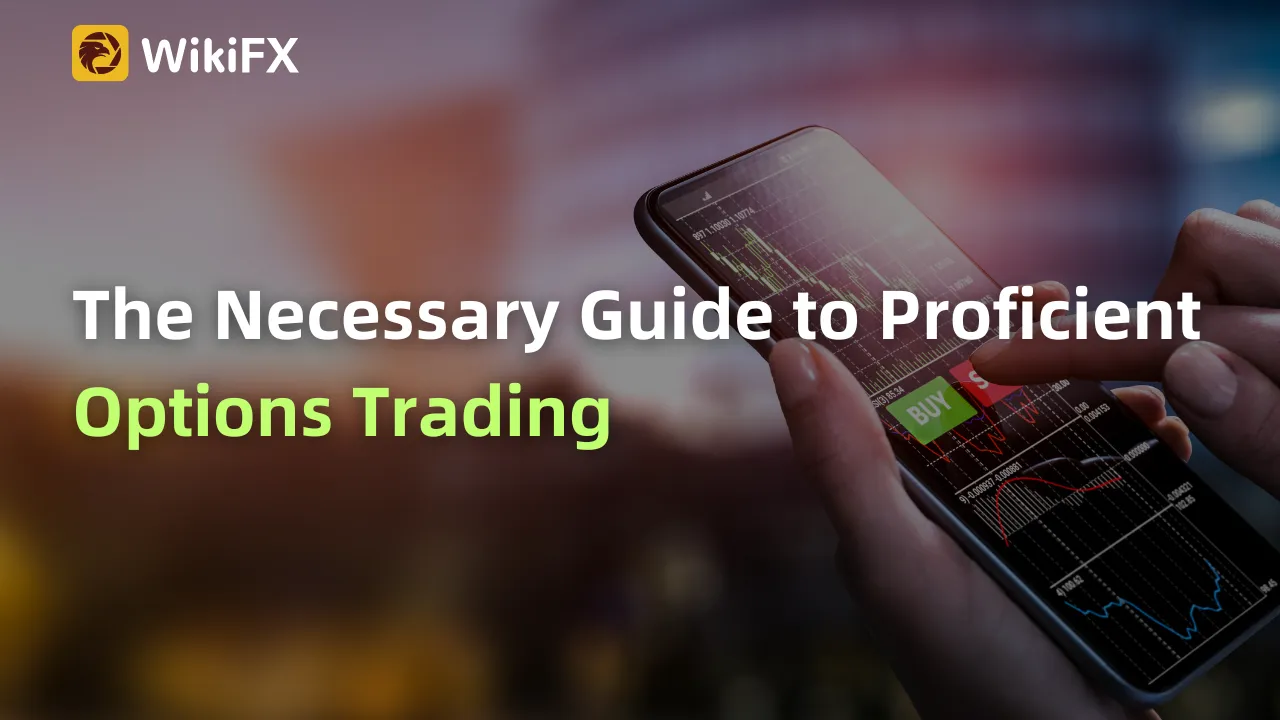
Options trading can be a lucrative financial strategy for savvy investors, providing opportunities to hedge risks, generate income, or speculate on market trends. However, the complexity of options trading can be daunting for beginners. This guide will provide a comprehensive understanding of options trading, including what options are, how they work, the associated risks, and strategies for proficient trading.
 Contents
What are the Options?
Options are financial products that derive their value from an underlying asset, usually equities. The buyer of an option contract has the right, but not the responsibility, to purchase (call option) or sell (put option) the underlying asset at a fixed price (strike price) before or on a particular date (expiration date). Options are standardized contracts exchanged on options exchanges that generally represent 100 shares of the underlying asset.
How do Options Work?
When you purchase a call option, you are betting that the underlying asset's price will climb before the expiry date, enabling you to acquire the item at a cheaper price and sell it for a profit at a higher market price. When you buy a put option, you're betting that the asset's price will decrease, enabling you to sell it at a higher price and then repurchase it at a lower market price for a profit.
In both cases, the maximum loss is limited to the premium paid to purchase the option. However, potential profit for call options is theoretically unlimited, while for put options, it's capped to the strike price less the premium paid.
The Greeks in Options Trading
In options trading, 'the Greeks' refer to variables represented by Greek letters that are used to understand the risks associated with options trading. They include:
- Delta: Measures the rate of change of an option's price relative to a one-dollar change in the underlying asset's price.
- Gamma: Measures the rate of change in Delta for a one-dollar change in the price of the underlying asset.
- Theta: Measures the rate of decline in the value of an option due to the passage of time.
- Vega: Measures the sensitivity of the option's price to changes in the underlying asset's volatility.
- Rho: Measures the sensitivity of the option's price to changes in the risk-free interest rate.
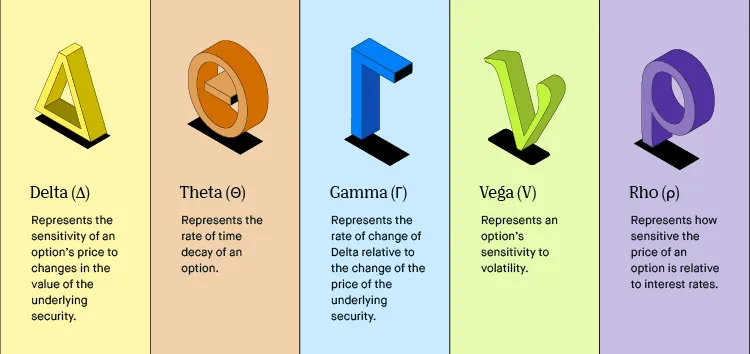
Understanding these variables can help manage the risks of options trading.
Trading Strategies
There are numerous strategies that options traders can employ, depending on their risk tolerance and market outlook:
- Covered Call: Involves owning the underlying asset and selling a call option against it. This is a conservative strategy used to generate income.
- Protective Put: Involves owning the underlying asset and buying a put option to protect against price declines.
- Bull Call Spread: Involves buying a call option and selling another with a higher strike price to reduce premium costs. This strategy is used when a moderate rise in the underlying asset's price is expected.
- Bear Put Spread: Involves buying a put option and selling another with a lower strike price to reduce premium costs. This strategy is used when a moderate decline in the underlying asset's price is expected.
- Straddles and Strangles: These are neutral strategies that involve buying or selling a set of calls and putting options with the same (straddle) or different (strangle) strike prices, expecting a big move in either direction.
Risks and Rewards
Options trading can offer significant rewards, but it's important to understand the associated risks. The primary risk for options buyers is the possibility of losing the entire premium paid if the option expires worthless. For options sellers, the risk can be substantial, as they're obligated to fulfill the contract if the buyer chooses to exercise the option.
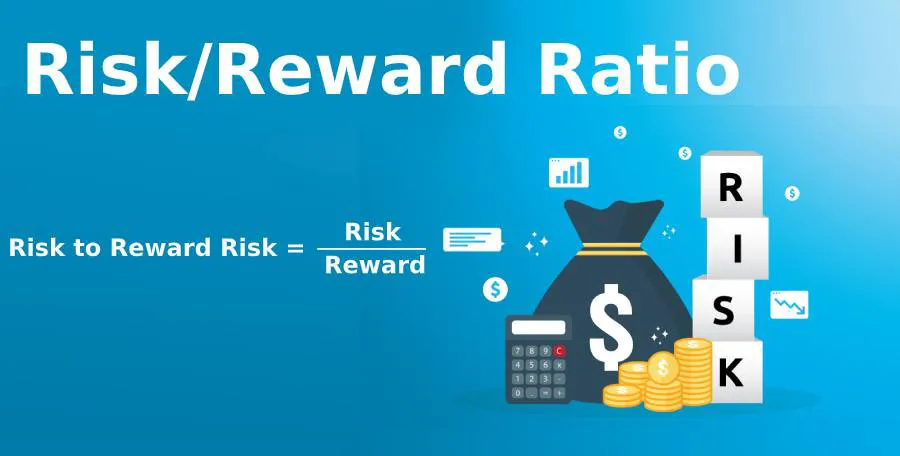
Options trading also involves market risk, as fluctuations in the underlying asset's price can impact the value of the option. Moreover, options are complex instruments that require knowledge and experience to trade proficiently. Misjudging the market direction, volatility, or time decay can lead to substantial losses.
Factors Influencing Options Pricing
Options pricing is influenced by several factors:
- Underlying Price: Options prices generally increase with the price of the underlying asset for call options and decrease for put options.
- Strike Price: The further the strike price is from the current price of the underlying asset, the less expensive the option tends to be.
- Time to Expiration: Options with more time until expiration are typically more expensive because the longer duration provides a greater chance for the underlying asset to move favorably.
- Volatility: Higher volatility increases the likelihood of the underlying asset's price reaching the strike price, making the option more expensive.
- Interest Rates: Higher interest rates increase the cost of call options and decrease the cost of put options.
- Dividends: Expected dividends reduce the price of call options and increase the price of put options.
Essential Skills for Options Trading
- Research and Analysis: Proficient options trading requires thorough research and analysis of the underlying assets and market trends. Utilize both technical analysis, which uses statistical trends from historical trading data, and fundamental analysis, which evaluates a company's financial health, to make informed decisions.
- Risk Management: Understanding and managing risk is crucial in options trading. Utilize stop-loss orders and position sizing to manage risk effectively.
- Emotional Control: Options trading can be emotionally challenging, especially during volatile markets. Successful traders maintain discipline, sticking to their trading plan and resisting the urge to make impulsive decisions.
- Continual Learning: The market is dynamic, and strategies that work today may not work tomorrow. Continuous learning and adaptation to market changes are key for long-term success in options trading.
Conclusion
Options trading offers a myriad of opportunities for sophisticated investors, but it also comes with significant risks. A deep understanding of the underlying concepts, along with thorough research, effective risk management, emotional control, and a commitment to continual learning, are all necessary for proficiency in options trading. By comprehending and applying the information in this guide, aspiring traders can begin their journey into the exciting world of options trading with confidence.
Download and install the WikiFX App on your smartphone to stay updated on the latest news.
Download the App here: https://social1.onelink.me/QgET/px2b7i8n