

Global Broker Regulation Inquiry App
About WikiFX



Malaysia Police Busted a Scam Call Centre & Arrested 3 Chinese Nationals

WikiFX
|


Abstract:Melaka police have dismantled a suspected scam call centre allegedly using fake online employment opportunities to lure victims, arresting three Chinese nationals and seizing dozens of mobile phones and other equipment during raids on two premises.
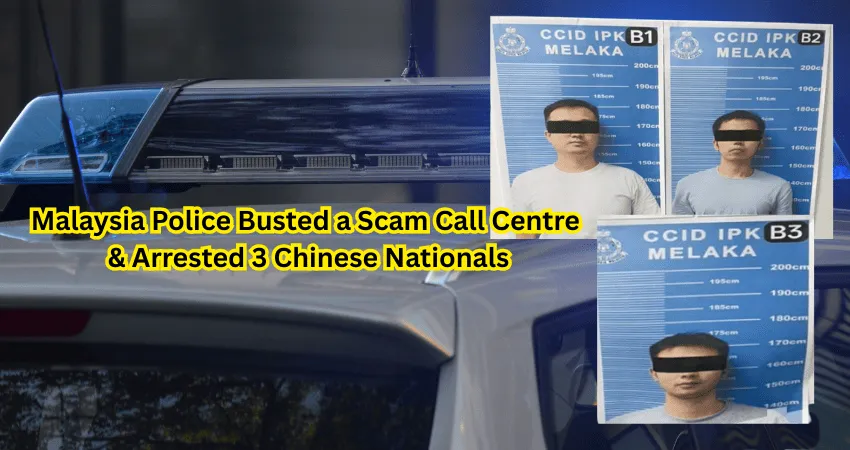
Melaka police have dismantled a suspected scam call centre allegedly using fake online employment opportunities to lure victims, arresting three Chinese nationals and seizing dozens of mobile phones and other equipment during raids on two premises.
The operation highlights how fraudulent recruitment schemes are increasingly being built around seemingly harmless online tasks, with victims initially offered small rewards before being drawn into requests for money.
Police said the three men, aged between 29 and 37, were arrested during an operation in Melaka Raya on September 10. Investigators seized 23 mobile phones, two passbooks and a laptop during the raids, according to local reports.
The suspected operation is believed to have been active since early August and allegedly focused on Chinese nationals searching for employment opportunities online. Rather than immediately asking targets for large sums, the group reportedly used a more gradual approach designed to establish trust before introducing financial demands.
Potential victims were allegedly approached through TikTok with offers for online work. They were given simple tasks such as liking advertisements or playing games on the platform, with promises of payment for completing the assignments.
Once a target showed interest, investigators said the initial contact would hand the victim over to other members of the group. The subsequent contacts would then allegedly continue the conversation and attempt to persuade the victim to make payments.
That structure reflects a familiar feature of modern online fraud, where the first interaction is designed to appear legitimate and low risk. A small task and a modest promised reward can make an opportunity appear considerably less threatening than a direct request for an investment or transfer of funds.
Police said the three suspects were allegedly working as customer service personnel for the operation, rather than operating independently. Each was reportedly paid 5,000 yuan a month, equivalent to about RM3,000, with the money mainly transferred through WeChat wallets.
The suspects have been remanded to assist with investigations. Police are investigating the case under Section 420 of the Penal Code, which concerns cheating, as well as provisions under the Immigration Act.
The Melaka investigation also shows why financial consumers should distinguish between earning money online and schemes that require money to be transferred before promised rewards can be received. As authorities continue targeting organised scam operations, the ability to identify suspicious payment requests early could remain one of the most important safeguards for Malaysian internet users.

Disclaimer:
The views in this article only represent the author's personal views, and do not constitute investment advice on this platform. This platform does not guarantee the accuracy, completeness and timeliness of the information in the article, and will not be liable for any loss caused by the use of or reliance on the information in the article.
WikiFX Broker
Latest News
NZDCHF: Bearish Now, But Is Smart Money Preparing the Reversal?
WikiFXRockGlobal Review for India: Which Licence Was Cancelled on 19 July 2024?
WikiFXOROKU EDGE Review 2026: What Traders Should Know About Withdrawal & Slippage Reports
WikiFXLeading the Transparency Movement, The Trust Dialogue with AUS GLOBAL
WikiFXIf You Still Struggle To Make Money After Passing a Prop Firm Challenge
WikiFXMalaysia Police Busted a Scam Call Centre & Arrested 3 Chinese Nationals
WikiFXTenX Prime Review 2026: Revisiting Withdrawal Denials & PAMM-related Fund Loss Complaints
WikiFXIG Faces Hundreds Of Job Cuts In Global Restructure
WikiFXMalaysia To Host Asia Fintech Regulatory Summit
WikiFXWeekend CFD Trading Moves Beyond Gold as Brokers Add Oil, Silver and Indices
WikiFX