Abstract:UK retail sales fell 0.5% in July 2026, while the three-month measure rose 1.1%. See the ONS details and what the mixed result may mean for GBP.
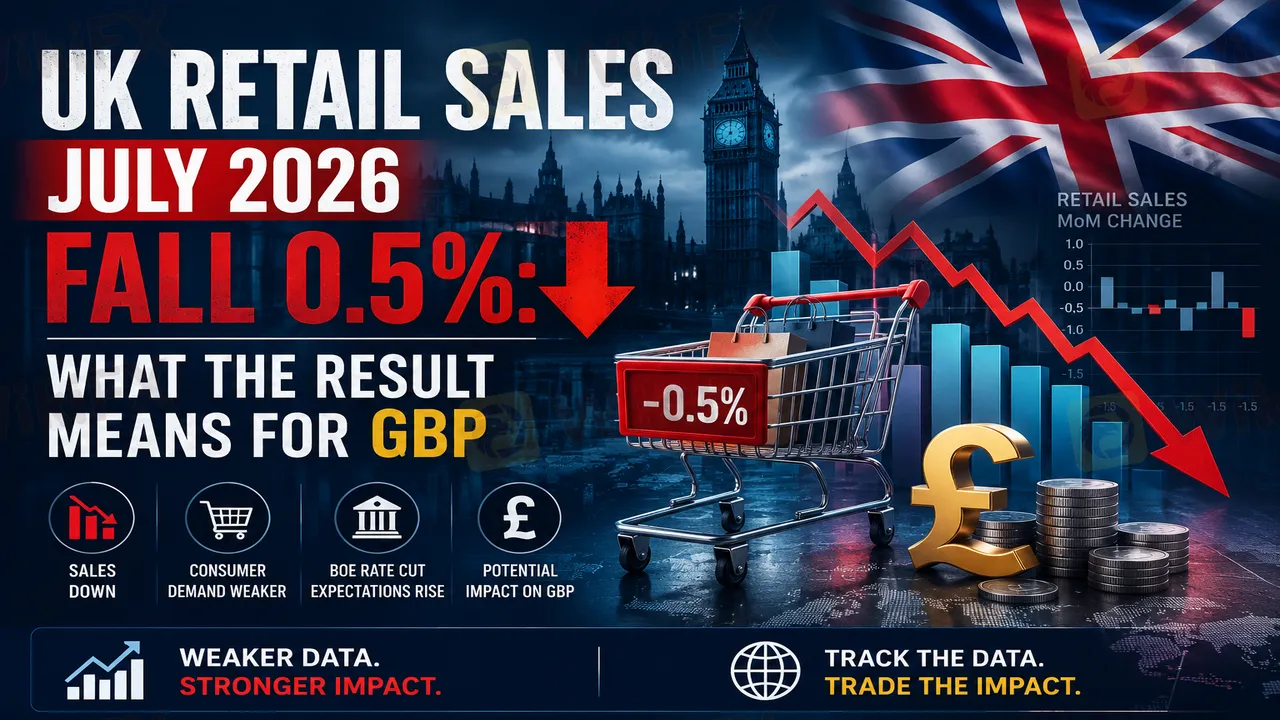
Quick answer: UK retail sales volumes fell by 0.5% in July 2026. Yet volumes rose by 1.1% over the latest three months and were 1.6% above July 2025, so the report shows a monthly setback rather than a broad collapse in demand.
 Contents
UK Retail Sales July 2026 at a Glance
The headline was soft. The Office for National Statistics said sales volumes dropped after promotions and warm-weather demand had pulled some purchases into June.
The wider trend looked better. Sales in the three months to July rose by 1.1% from the previous three-month period, and most main sectors increased over that broader window.
What Caused the Monthly Fall
Timing mattered. Retailers told the ONS that earlier promotions brought some demand forward, while hot weather reduced July footfall for clothing and lowered demand for some household goods.
Non-food stores fell by 1.3% over the month. Clothing, household goods, department stores, and non-store retailers weakened, although food stores rose as supermarkets benefited from the weather and the World Cup.
- Some June promotions shifted purchases away from July.
- Heat reduced footfall and demand for selected products.
- Food-store sales partly offset weakness elsewhere.
What the Report may Mean for the GBP Outlook
The first reaction may be cautious. A weaker monthly number can weigh on the British pound if traders think consumer demand and growth are losing speed.
But the signal is mixed. The positive three-month and annual readings make a one-way British pound forecast risky, especially when inflation, wages, business surveys, global risk, and interest-rate expectations can move GBP at the same time.
Watch confirmation. If later releases also weaken, the soft monthly print may look more important. If demand and labour data stay firm, markets may treat July as a pause after an unusually strong early summer.
Retail consumption is economically important. A responsible interpretation must still account for seasonal patterns, revisions, inflation, and the difference between spending values and sales volumes.
Interpretation should remain probabilistic. Retail statistics influence currency expectations through growth, inflation, and monetary-policy channels, but the transmission is neither immediate nor mechanically predictable.
Three GBP Scenarios
How to Trade the Data without Overreading it
Start with the time frame. A monthly retail number can move fast, but it is often revised and may reflect weather, promotions, or calendar effects.
Then control risk. Compare the release with market expectations, the previous value, revisions, price action, and the next major UK data before increasing a position.
- Separate the monthly, three-month, and annual measures.
- Check revisions before using the prior month as a baseline.
- Avoid treating retail sales as a direct Bank of England signal.
- Use position limits because GBP can reverse after the first move.
Data Quality Note
The survey response rate was 56.9% by returned forms. Those responses covered 88.4% of the sample population's turnover, which is useful context when judging the first estimate.
Revisions are normal. The ONS lowered June growth to 0.7% from 1.0%. It also raised May growth to 1.3% from 1.2%, so readers should keep the latest series rather than only the first headline.
FAQs
Did UK retail sales fall in July 2026?
Yes. Sales volumes fell by 0.5% from June, according to the ONS first estimate.
Was the wider trend also negative?
No. Volumes rose by 1.1% over the latest three months and by 1.6% from July 2025.
Does weak retail sales mean GBP must fall?
No. The pound also responds to inflation, wages, policy expectations, global risk, and market positioning.
Risk notice: This article explains an official economic release. It is not a GBP trade signal or investment advice. Currency markets are volatile, and leveraged positions can lose more quickly than expected.
Download the WikiFX app for the latest forex updates.
Knowledge pays at WikiFX.Every time you share a WikiFX article, you'll receive 50 Reward Points. Grow your rewards with every share and unlock exclusive gifts in the WikiFX Points Mall. Start earning today!