


Vietnam Becomes New Base for Cross Border Scam Syndicates After Cambodia Crackdown
Cross border scam syndicates are constantly adapting to evade law enforcement by moving from Cambodia to Vietnam.
Original

简体中文
繁體中文
English
Pусский
日本語
ภาษาไทย
Tiếng Việt
Bahasa Indonesia
Español
हिन्दी
Filippiiniläinen
Français
Deutsch
Português
Türkçe
한국어
العربية
اردو




Abstract:Malaysian singer Linda Rafar alleges that she was deceived by a group of individuals carrying the honorary title “Datuk”.
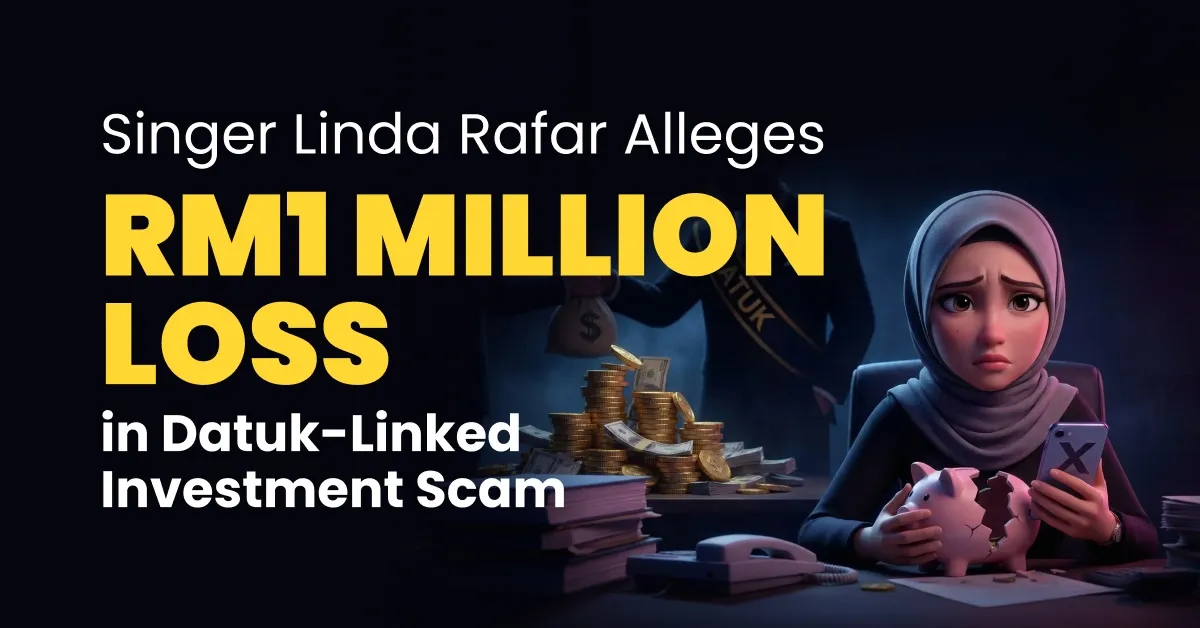
Malaysian singer Linda Rafar has stepped into the public spotlight for reasons far removed from music, alleging that a failed business venture has left her nearly RM1 million poorer and forced her to abandon plans to support vulnerable communities.
Rafar, 47, whose real name is Azlinda Abdul Rafar, claims she was deceived by a group of individuals carrying the honorary title “Datuk”. According to her account, the incident began around six months ago when she agreed to participate in a business deal after being introduced to the group through mutual contacts. Their public profile and titles, she said, gave her confidence that the venture was legitimate and secure.
Rafar alleges that she invested almost everything she had into the deal, committing close to RM1 million. The funds were drawn from multiple sources, including her personal savings, business capital and money that had already been earmarked for charitable purposes. She has stressed that the investment was not driven purely by profit, but by a longer-term aim to generate returns that could be channelled towards tahfiz students, orphans and other disadvantaged groups.
Those plans, she says, have now collapsed. Despite assurances that profits would be forthcoming, Rafar claims she has not received any returns since the investment was made. Months of follow-ups have produced little more than promises, leaving her in financial and emotional distress. As time passed, she says her requests became more urgent, including appeals for partial repayment through instalments so she could honour commitments already made to beneficiaries.
The impact on her personal life has been significant. Rafar has spoken openly about the strain of watching savings built over years disappear, describing a period marked by anxiety and exhaustion. She credits her family for providing support during what she characterises as one of the most difficult phases of her life.
In an effort to cope and seek resolution, Rafar has also turned to faith-based responses. She recently organised special prayers and Yasin recitations involving tahfiz students and religious teachers, hoping that spiritual intervention would ease the situation. Alongside this, she has appealed to the public for prayers and understanding, while continuing to urge those involved to return the money.
Her frustration ultimately led her to take the matter public. Earlier this year, Rafar used social media to issue a clear warning to the individuals she accuses of abusing her trust. She explained that after nearly six months without progress, she felt compelled to speak out regarding this investment scam. While she acknowledged the risks of public exposure, she framed the move as a necessary first step to recover the funds.
Rafar has emphasised that the dispute goes beyond her personal losses. By highlighting that part of the money was intended for charity, she has positioned the case as a cautionary tale about responsibility and trust. As the matter remains unresolved, her experience stands as a major reminder of how reputation and titles can mask risk, and how quickly confidence can turn into costly regret.

Disclaimer:
The views in this article only represent the author's personal views, and do not constitute investment advice on this platform. This platform does not guarantee the accuracy, completeness and timeliness of the information in the article, and will not be liable for any loss caused by the use of or reliance on the information in the article.

Cross border scam syndicates are constantly adapting to evade law enforcement by moving from Cambodia to Vietnam.

Singapore authorities have concluded a major anti-scam enforcement operation that resulted in 221 individuals being placed under investigation for their alleged roles in a wide range of fraudulent schemes.

Malaysia may be emerging as a new destination for transnational scam syndicates seeking to evade mounting pressure from international law enforcement agencies, according to a leading humanitarian organisation.

He Claimed Elite Connections. She Ended Up Losing Millions and Her Dream Car
WikiFXWikiFXWikiFXWikiFXWikiFXWikiFXWikiFXWikiFXWikiFXWikiFX