


Vietnam Becomes New Base for Cross Border Scam Syndicates After Cambodia Crackdown
Cross border scam syndicates are constantly adapting to evade law enforcement by moving from Cambodia to Vietnam.
Original

简体中文
繁體中文
English
Pусский
日本語
ภาษาไทย
Tiếng Việt
Bahasa Indonesia
Español
हिन्दी
Filippiiniläinen
Français
Deutsch
Português
Türkçe
한국어
العربية
اردو




Abstract:The dark web of banking: how a ‘legitimate’ bank became a front for global fraud!
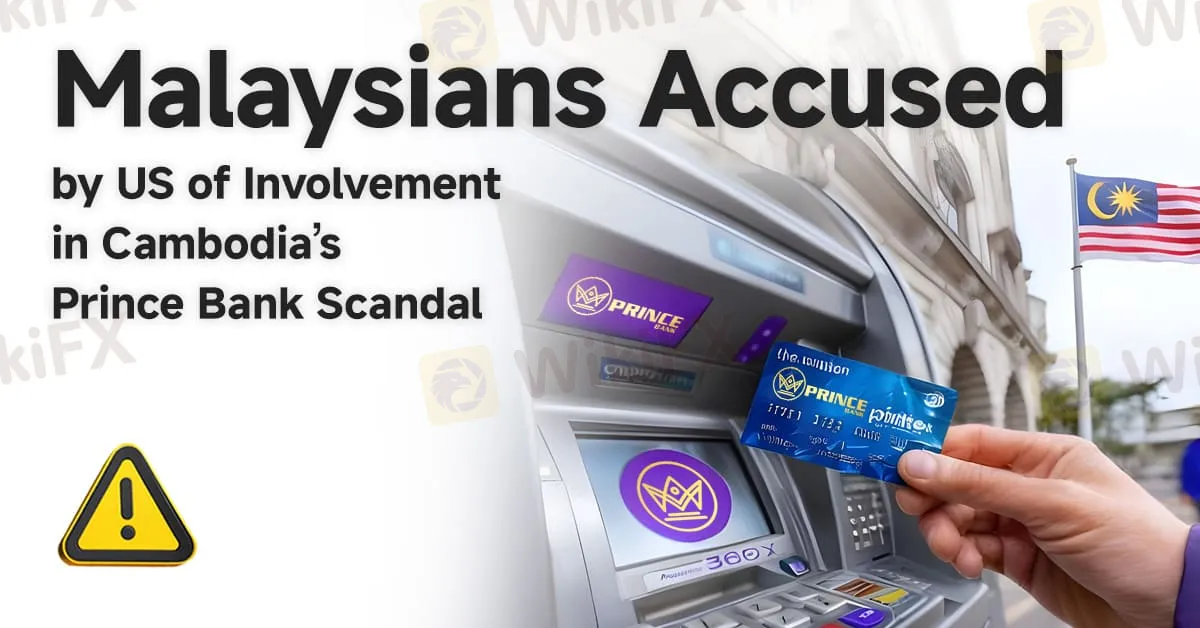
Former Bank Negara Malaysia governor Tan Sri Muhammad Ibrahim has stepped down from his position on the board of Cambodias Prince Bank Plc, after the bank and its parent company, the Prince Group, were accused by United States authorities of being tied to a global cyber fraud network.
The US Department of the Treasury, in a statement issued on 14 October 2025, identified the Prince Group Transnational Criminal Organisation (Prince Group TCO) as a Cambodia-based network allegedly led by Cambodian businessman Chen Zhi. According to the department, profits from the groups cyber fraud operations were channelled into its “legitimate-looking” businesses, which include Prince Bank.
Chen, who holds majority ownership of Prince Bank, has been charged in New York with wire fraud and money laundering. US prosecutors alleged that he oversaw scam compounds across Cambodia where victims were held against their will and forced to operate cryptocurrency investment scams, known as “pig butchering” schemes. These scams reportedly stole billions of dollars from victims around the world.
US authorities have seized around US$15 billion (RM63.35 billion) in Bitcoin linked to Chen‘s operations. Despite the charges, he remains at large. The US Treasury’s Office of Foreign Assets Control (OFAC) and Financial Crimes Enforcement Network (FinCEN), together with the UKs Foreign, Commonwealth and Development Office (FCDO), have imposed sanctions on Prince Group and its affiliated companies, cutting them off from the US financial system.
While no Malaysian executives have been accused of any wrongdoing, several have held key positions at Prince Bank. Its former chief executive officer, Looi Kok Soon, resigned on 22 October, just months after his appointment in December 2024. He had previously served at OCBC Bank Malaysia, EON Bank, and Standard Chartered Bank. The banks chief financial officer, Liong Khai Sim, was previously with Maybank Group, while other Malaysians have served in roles including chief information officer, chief people and communications officer, chief risk officer, and chief distribution officer.
Muhammad Ibrahim stated earlier that his position at Prince Bank was independent and non-executive, focused on governance and compliance under the supervision of the National Bank of Cambodia. However, he resigned from the board on the same day as Looi, shortly after the US sanctions were announced.
At the time of reporting, Prince Banks website no longer displayed details of its Malaysian directors or senior management.
Prince Bank was established in 2015 and received a commercial banking licence in 2018. Since then, it has expanded to 36 branches across 22 provinces and cities in Cambodia. Its total assets have grown from US$421.55 million in 2019 to US$1.52 billion in 2024, and it recorded a net profit of US$3.62 million last year.
The fallout from the US investigation has reached beyond Cambodia. In neighbouring Thailand, Deputy Finance Minister Vorapak Tanyawong resigned after reports linked his family to payments from the same criminal network. He has denied the allegations.
The issue is expected to be discussed at the 47th ASEAN Summit in Kuala Lumpur later this month, where officials will call for stronger cooperation to combat online fraud networks operating across Cambodia and nearby countries.

Disclaimer:
The views in this article only represent the author's personal views, and do not constitute investment advice on this platform. This platform does not guarantee the accuracy, completeness and timeliness of the information in the article, and will not be liable for any loss caused by the use of or reliance on the information in the article.

Cross border scam syndicates are constantly adapting to evade law enforcement by moving from Cambodia to Vietnam.

Singapore authorities have concluded a major anti-scam enforcement operation that resulted in 221 individuals being placed under investigation for their alleged roles in a wide range of fraudulent schemes.

Malaysia may be emerging as a new destination for transnational scam syndicates seeking to evade mounting pressure from international law enforcement agencies, according to a leading humanitarian organisation.

He Claimed Elite Connections. She Ended Up Losing Millions and Her Dream Car
WikiFXWikiFXWikiFXWikiFXWikiFXWikiFXWikiFXWikiFXWikiFXWikiFX