


Vietnam Becomes New Base for Cross Border Scam Syndicates After Cambodia Crackdown
Cross border scam syndicates are constantly adapting to evade law enforcement by moving from Cambodia to Vietnam.
Original

简体中文
繁體中文
English
Pусский
日本語
ภาษาไทย
Tiếng Việt
Bahasa Indonesia
Español
हिन्दी
Filippiiniläinen
Français
Deutsch
Português
Türkçe
한국어
العربية
اردو




Abstract:Germany’s BaFin has flagged several websites and email addresses for offering unauthorized investment services and impersonating legitimate institutions.
Germanys Federal Financial Supervisory Authority (BaFin) has issued a series of warnings targeting unregulated financial platforms and cases of identity fraud. These warnings serve as a reminder to investors to verify the legitimacy of any financial service provider before engaging in trading or investment activities.
BaFin warns against Curran Investments Limited, which operates the website curr-inv.com and claims to have an office in Manchester, UK. According to BaFin, the platform is offering financial, investment, and crypto-related services in Germany without proper authorization.
Under German law, any entity offering such services must be licensed by BaFin. curr-inv.com is not listed in BaFins official company database, indicating that the operator is acting unlawfully.
BaFin has also flagged fraudulent bond offers sent from the email address info@walterludwig-gmbh.com. These offers falsely claim to be from Walter Ludwig GmbH Wertpapierhandelsbank, a legitimate firm that does not provide investment services to private clients.
BaFin clarified that this is a case of identity theft, and the website walterludwig-gmbh.com is not affiliated with the genuine company in any way.
Another fraudulent website, falkring-invest.com, has come under scrutiny for offering unlicensed investment and crypto services. BaFin also noted that the platform falsely claims to be supervised by BaFin. This statement is factually incorrect, and the platform is not authorized to operate in Germany.
BaFin warns about investment offers made via the sdiana.top website and WhatsApp groups claiming affiliation with “Fidelity Institut”. These operators are suspected of offering financial services without authorization and falsely impersonating the well-known Fidelity International (FIL Limited) and its affiliates.
BaFin emphasized that none of these offers come from the legitimate Fidelity entities, and this is a clear case of identity fraud.
BaFin urges consumers to check whether a financial service provider is properly authorized before investing. You can verify a firm‘s status using BaFin’s official company database at www.bafin.de.
Unauthorized platforms pose serious risks, including loss of funds and lack of legal recourse. When in doubt, consult trusted databases such as WikiFX to ensure the legitimacy of brokers or platforms you plan to use.
Disclaimer:
The views in this article only represent the author's personal views, and do not constitute investment advice on this platform. This platform does not guarantee the accuracy, completeness and timeliness of the information in the article, and will not be liable for any loss caused by the use of or reliance on the information in the article.

Cross border scam syndicates are constantly adapting to evade law enforcement by moving from Cambodia to Vietnam.
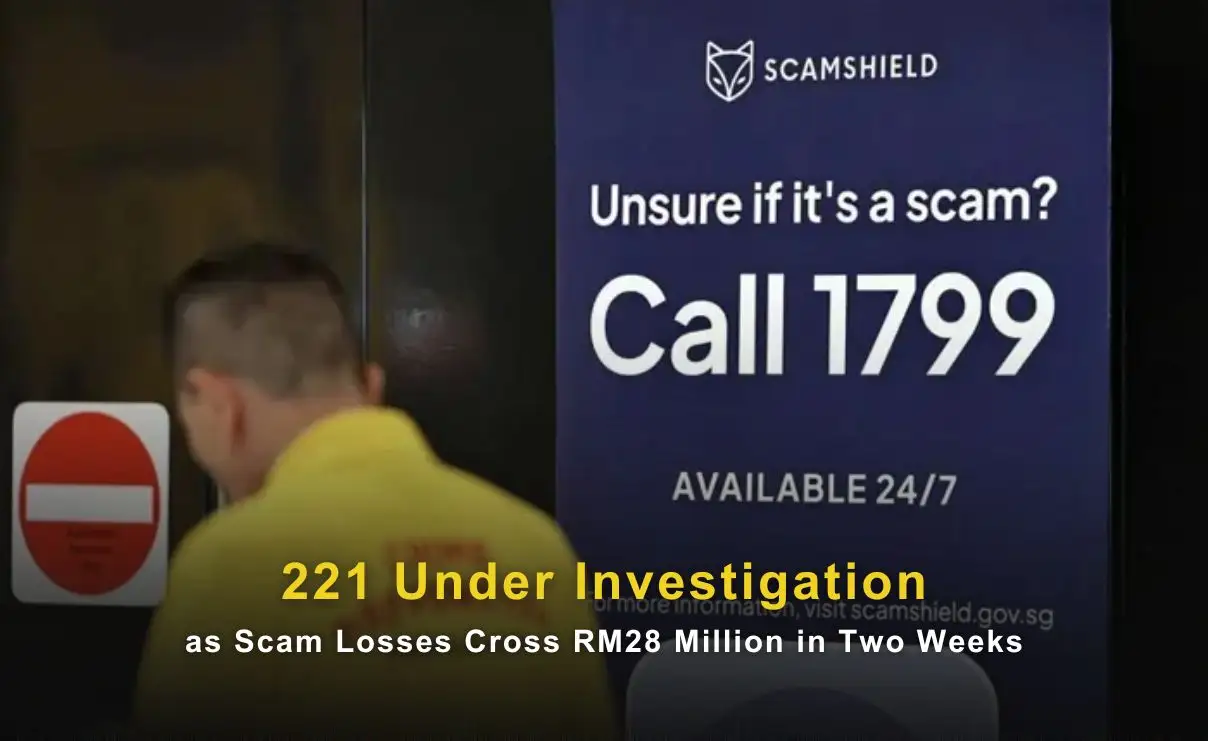
Singapore authorities have concluded a major anti-scam enforcement operation that resulted in 221 individuals being placed under investigation for their alleged roles in a wide range of fraudulent schemes.

Malaysia may be emerging as a new destination for transnational scam syndicates seeking to evade mounting pressure from international law enforcement agencies, according to a leading humanitarian organisation.

He Claimed Elite Connections. She Ended Up Losing Millions and Her Dream Car
WikiFXWikiFXWikiFXWikiFXWikiFXWikiFXWikiFXWikiFXWikiFXWikiFX