


Vietnam Becomes New Base for Cross Border Scam Syndicates After Cambodia Crackdown
Cross border scam syndicates are constantly adapting to evade law enforcement by moving from Cambodia to Vietnam.
Original

简体中文
繁體中文
English
Pусский
日本語
ภาษาไทย
Tiếng Việt
Bahasa Indonesia
Español
हिन्दी
Filippiiniläinen
Français
Deutsch
Português
Türkçe
한국어
العربية
اردو




Abstract:He was promised a 200% return in 3 months. Do you think that’s too good to be true?!

A 66-year-old Malaysian businessman has fallen prey to an elaborate online investment scam, suffering financial losses amounting to RM1.8 million. The incident, which took place between November 2024 and January 2025, is now under investigation by the Johor police.
According to Johor police chief M Kumar, the victim had discovered an advertisement on social media in October last year. The promotion offered unusually high investment returns, claiming that a 200% profit could be achieved within just three months. Drawn in by the promise of quick gains, the businessman clicked on the link embedded in the advertisement to learn more.
Following the link, he was instructed to download a mobile application and create an account through which he could monitor his investments. He then proceeded to transfer funds in multiple transactions to several different bank accounts as directed by the purported investment platform. The total amount transferred over the two-month period reached RM1.8 million.

Despite repeated assurances, the promised returns never materialised. The suspect, who initially maintained contact, began to offer vague explanations for the lack of payouts. Eventually, all communication ceased. The businessman found himself unable to access the investment application and realised he had been blocked. It was at this point that he suspected he had been defrauded and filed a police report.
The case is now being investigated under Section 420 of the Penal Code, which deals with cheating and dishonestly inducing the delivery of property.
Police authorities have since issued a warning to the public, urging individuals to be cautious when approached with online investment opportunities that advertise high returns within a short timeframe. They emphasised the importance of verifying the credibility of such platforms before making any financial commitments.

One resource highlighted for public use is WikiFX, a mobile application designed to help investors assess the legitimacy of brokers and investment platforms. Available on both Google Play and the App Store, WikiFX provides essential information such as regulatory compliance, user reviews, and risk alerts. By enabling users to investigate the background of financial service providers, the platform acts as a safeguard against fraudulent schemes and unlicensed entities.

Disclaimer:
The views in this article only represent the author's personal views, and do not constitute investment advice on this platform. This platform does not guarantee the accuracy, completeness and timeliness of the information in the article, and will not be liable for any loss caused by the use of or reliance on the information in the article.

Cross border scam syndicates are constantly adapting to evade law enforcement by moving from Cambodia to Vietnam.
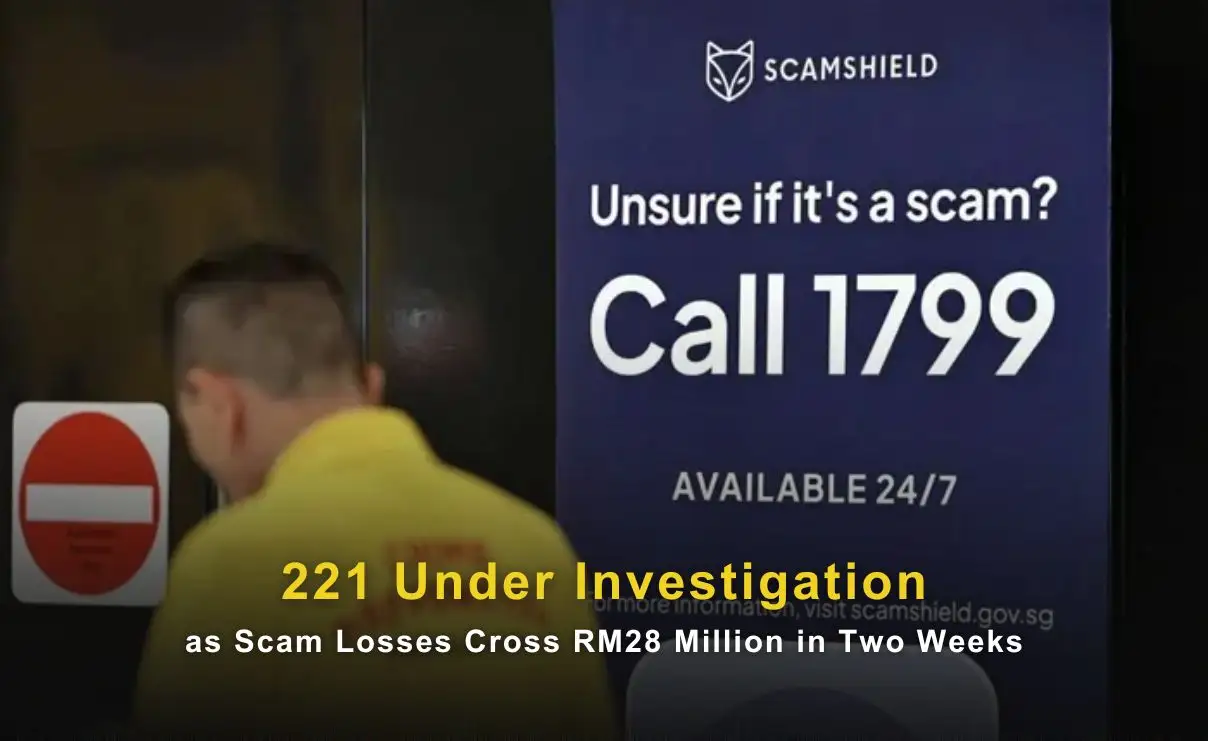
Singapore authorities have concluded a major anti-scam enforcement operation that resulted in 221 individuals being placed under investigation for their alleged roles in a wide range of fraudulent schemes.

Malaysia may be emerging as a new destination for transnational scam syndicates seeking to evade mounting pressure from international law enforcement agencies, according to a leading humanitarian organisation.

He Claimed Elite Connections. She Ended Up Losing Millions and Her Dream Car
WikiFXWikiFXWikiFXWikiFXWikiFXWikiFXWikiFXWikiFXWikiFXWikiFX