


Vietnam Becomes New Base for Cross Border Scam Syndicates After Cambodia Crackdown
Cross border scam syndicates are constantly adapting to evade law enforcement by moving from Cambodia to Vietnam.
Original

简体中文
繁體中文
English
Pусский
日本語
ภาษาไทย
Tiếng Việt
Bahasa Indonesia
Español
हिन्दी
Filippiiniläinen
Français
Deutsch
Português
Türkçe
한국어
العربية
اردو




Abstract:A Malaysian assistant human resources manager has lost nearly RM580,000 to a fraudulent online investment scheme based in Taiwan.

A Malaysian assistant human resources manager has lost nearly RM580,000 to a fraudulent online investment scheme.
According to police in Nilai, Negeri Sembilan, the victim, who is in her 50s, was first approached via Facebook in December 2024. An individual claimed to represent a Taiwan-based investment opportunity, presenting it as a fast-track route to significant profits. The investment was said to offer returns well above market norms, a common red flag many victims overlook in their pursuit of financial growth.
Nilai District Police Chief, Superintendent Abdul Malik Hasim, explained that the victim was encouraged to download a mobile application allegedly tied to the scheme. The app was designed to mimic a legitimate investment interface, further convincing the victim that the operation was real.
Driven by the promise of substantial earnings, the woman proceeded to transfer RM207,000 into seven separate bank accounts. She also handed over RM372,000 in physical cash to a man in Nilai who posed as a local representative of the investment company. These transactions took place over several weeks, during which the victim believed her funds were being safely invested.
However, suspicions arose on 16 April 2025, when she attempted to access the application to withdraw her supposed profits, only to find herself locked out of the platform. Her inability to reach any of the schemes representatives and the sudden disappearance of access to her funds led her to the painful realisation that she had been deceived. She filed a police report shortly thereafter.

The case is currently being investigated under Section 420 of the Malaysian Penal Code, which covers cheating and dishonestly inducing the delivery of property. Convictions under this statute can carry a prison sentence ranging from one to ten years, with the possibility of whipping and fines.
This incident is far from isolated. As online financial platforms become more sophisticated, so too do the tactics of cybercriminals. Social media, in particular, has become a prime hunting ground for fraudsters who target="_blank" kwlink="6384064000816950219725">target individuals with promises of easy money, false credentials, and professionally designed platforms.
Experts in financial security consistently warn that any investment offering unusually high or guaranteed returns should be treated with suspicion. In regulated markets, returns are always tied to risk; if something appears too good to be true, it almost certainly is.
Members of the public are strongly encouraged to perform due diligence before parting with their money. One effective tool is the WikiFX mobile application, available on both Google Play and the App Store. WikiFX is a global broker verification platform that allows users to check the legitimacy of financial service providers. It includes regulatory information, user reviews, licensing details, and risk warnings, giving potential investors the information they need to avoid scams.

In todays digital landscape, trust must be earned, not assumed. Individuals are advised to verify licences, research company backgrounds, and consult reputable financial advisors before making investment decisions.
Investors should exercise caution when confronted with unsolicited investment offers, particularly those received through social media platforms or messaging apps. Such approaches are often the first sign of a potential scam. Promises of unusually high returns with minimal or no risk should also raise immediate red flags, as legitimate investments always involve some level of risk. Be wary of any scheme that pressures you to act quickly or urges you to keep the opportunity confidential, as this is a common tactic used to prevent victims from seeking advice or conducting proper research. Additionally, requests for cash payments or instructions to transfer money to multiple bank accounts are strong indicators of fraudulent activity and should be treated with extreme suspicion.
If in doubt, do not engage. Report suspicious activity to the relevant authorities and make use of regulatory resources and tools to assess risks before making any financial commitments.

Disclaimer:
The views in this article only represent the author's personal views, and do not constitute investment advice on this platform. This platform does not guarantee the accuracy, completeness and timeliness of the information in the article, and will not be liable for any loss caused by the use of or reliance on the information in the article.

Cross border scam syndicates are constantly adapting to evade law enforcement by moving from Cambodia to Vietnam.
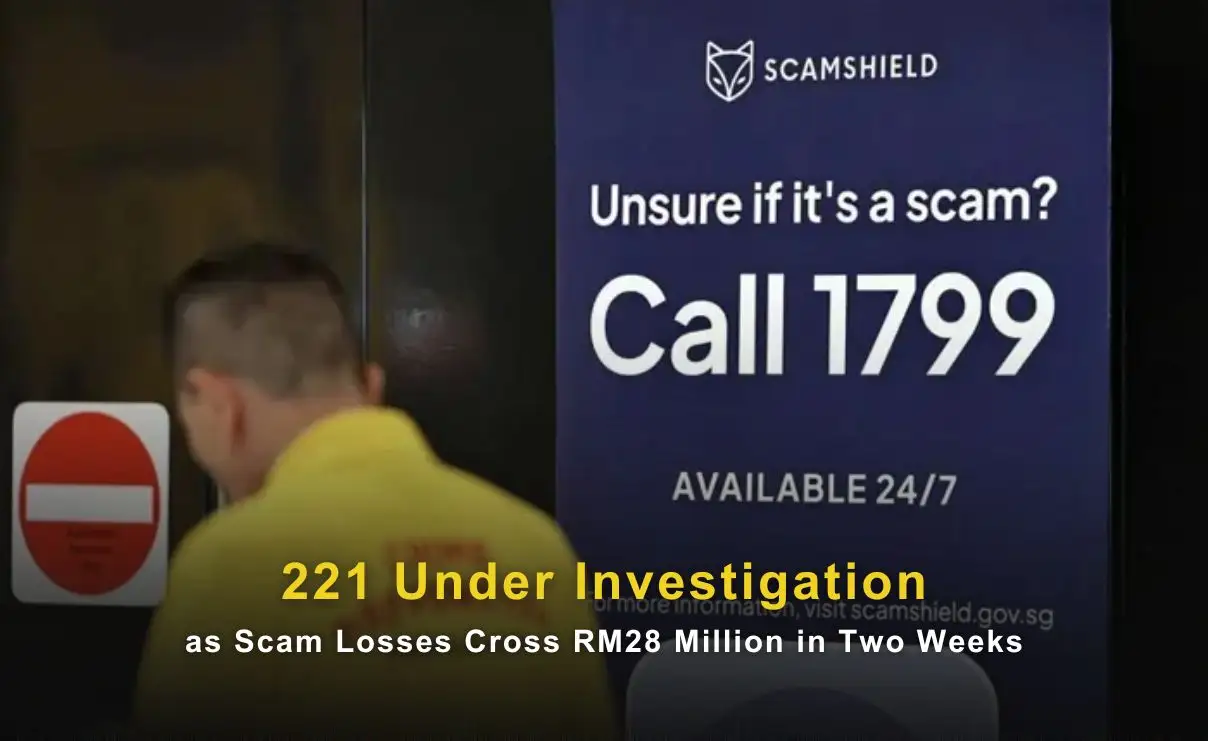
Singapore authorities have concluded a major anti-scam enforcement operation that resulted in 221 individuals being placed under investigation for their alleged roles in a wide range of fraudulent schemes.

Malaysia may be emerging as a new destination for transnational scam syndicates seeking to evade mounting pressure from international law enforcement agencies, according to a leading humanitarian organisation.

He Claimed Elite Connections. She Ended Up Losing Millions and Her Dream Car
WikiFXWikiFXWikiFXWikiFXWikiFXWikiFXWikiFXWikiFXWikiFXWikiFX