HYCM UK Swings to £236,304 Loss in 2025 as Costs Outpace Revenue Growth
HYCM Capital Markets (UK) Limited reported a £236,304 loss for 2025, as higher administrative costs offset a small rise in revenue and reversed the previous year’s profit.
简体中文
繁體中文
English
Pусский
日本語
ภาษาไทย
Tiếng Việt
Bahasa Indonesia
Español
हिन्दी
Filippiiniläinen
Français
Deutsch
Português
Türkçe
한국어
العربية
Abstract:Robinhood agrees to a $7.5 million fine in a settlement with Massachusetts regulators over allegations of encouraging risky trades among inexperienced investors, addressing concerns of platform outages and aggressive marketing tactics.
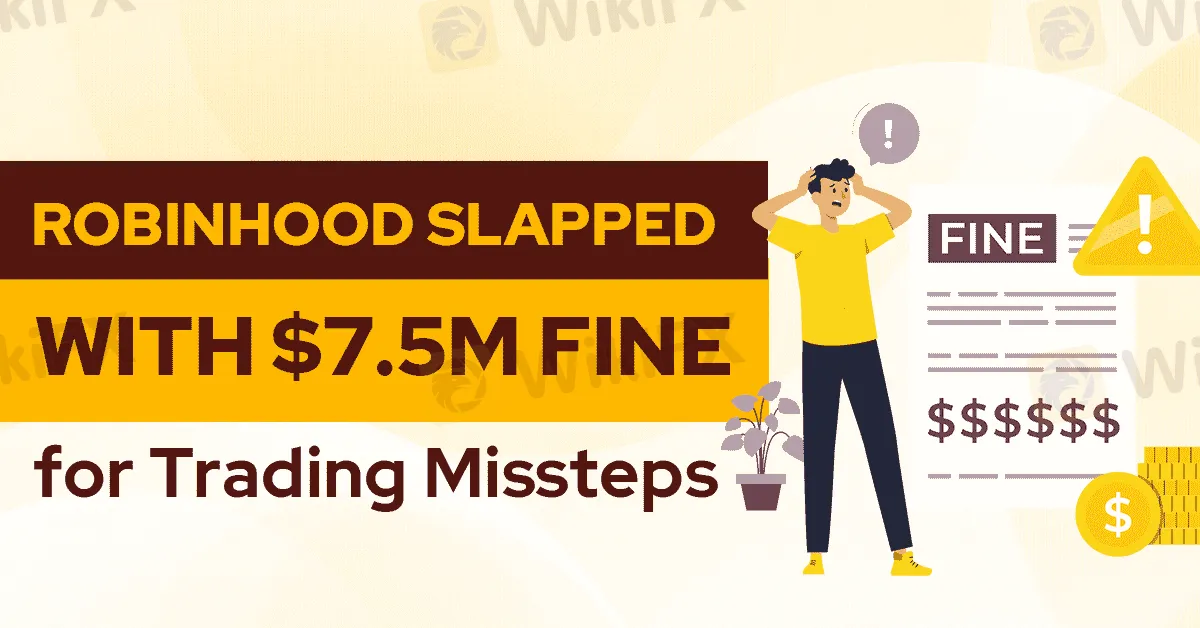
Robinhood, the no-fee trading app, has reached an agreement to pay a $7.5 million fine and overhaul its operational practices following a settlement with securities regulators in Massachusetts.
The settlement stems from allegations that Robinhood encouraged inexperienced investors to participate in risky trades, addressing an administrative enforcement action initiated in 2020 by Massachusetts Secretary of State Bill Galvin. The action contended that Robinhood's platform design and marketing strategies amounted to the “gamification” of trading, boosting user engagement but risking the promotion of hazardous trading behaviours among inexperienced investors.
The enforcement arm of the Massachusetts Securities Division found that Robinhood failed to prevent frequent outages and disruptions on its trading platform. The platform also employed aggressive marketing tactics to attract inexperienced traders, utilizing “gamification methods to control clients.”

Despite reporting limited or no investing expertise, Robinhood's own calculations revealed that 68% of its Massachusetts-based customers were authorized to trade options.
In December 2020, the Secretary of the Commonwealth of Massachusetts, William Galvin, filed a lawsuit against Robinhood, accusing the platform of aggressively marketing to inexperienced investors and exposing them to unnecessary risks. The lawsuit also claimed that Robinhood failed to adequately screen customers for eligibility to trade options.
Robinhood has encountered multiple legal challenges and regulatory investigations, leading to commitments to collaborate with regulators to address concerns and implement platform changes. In April 2022, the North American Securities Administrators Association (NASAA) imposed a $10.2 million penalty on Robinhood for poor communications with customers and trading outages in 2020.


Disclaimer:
The views in this article only represent the author's personal views, and do not constitute investment advice on this platform. This platform does not guarantee the accuracy, completeness and timeliness of the information in the article, and will not be liable for any loss caused by the use of or reliance on the information in the article.

HYCM Capital Markets (UK) Limited reported a £236,304 loss for 2025, as higher administrative costs offset a small rise in revenue and reversed the previous year’s profit.

As of December 1, 2025, a total of 105 companies in the United Kingdom held CFD licences.

BotBro is a Dubai-based forex broker that has continued to grab headlines for years, with its name being involved in one scam after another. In the latest episode, its name was found in the alleged INR 800 crore forex and crypto trading scam in Goa. Top-level agencies, including the Enforcement Directorate (ED), are investigating the case. They have labeled the platform as a Ponzi scheme. The platform is disguised as an AI-powered forex trading app. In connection with this case, the Goa Police Economic Offences Cell (EOC) filed a First Information Report (FIR) against 10 individuals, including the company owner, Lavish Chaudhary Alias Nawab Ali, for fund misappropriation worth over INR 7.3 crore. Read on as we share the BotBro review in this article.

In what would lift the mood of rupee derivative traders, the Reserve Bank of India (RBI) partially lifted some restrictions on rupee derivative trades imposed by the regulator on April 1, 2026. On this day, the central bank prevented banks from issuing non-deliverable forwards to clients and barred companies from reassessing forward contracts as part of its strategy to counter arbitrage trades, which caused fluctuations in the rupee’s exchange rate. The central bank further prevented banks from signing FX derivative contracts involving the rupee with their associated parties. Read on!