HYCM UK Swings to £236,304 Loss in 2025 as Costs Outpace Revenue Growth
HYCM Capital Markets (UK) Limited reported a £236,304 loss for 2025, as higher administrative costs offset a small rise in revenue and reversed the previous year’s profit.
简体中文
繁體中文
English
Pусский
日本語
ภาษาไทย
Tiếng Việt
Bahasa Indonesia
Español
हिन्दी
Filippiiniläinen
Français
Deutsch
Português
Türkçe
한국어
العربية
Abstract:The Financial Action Task Force (FATF) has added South Africa and Nigeria to its watch list for money laundering.

By: Chime Amara
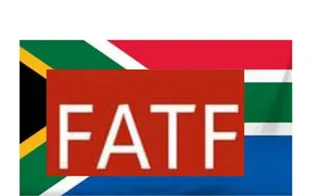
In a move that has sent shockwaves through the financial industry, the has added South Africa to its grey list for money laundering, alongside Nigeria. The decision was made during a plenary session held by the international watchdog in Paris on February 24, 2023.
The grey list is a warning to countries that their financial systems are not up to scratch when it comes to combating money laundering and terrorist financing. Being on the grey list means that financial institutions operating in South Africa will face increased scrutiny, making it more difficult for them to do business internationally.
This is a blow to South Africa, which has been trying to improve its reputation as a financial hub and attract investment to its struggling economy. It is also a setback for the country's efforts to combat corruption and financial crime.
The FATF stated that South Africa has made progress in implementing its action plan to address the deficiencies in its anti-money laundering and counter-terrorist financing regime. However, the watchdog also noted that more needs to be done to fully address the identified weaknesses.
The South African government has responded to the news by saying that it is committed to working with the FATF to address the issues and to fully implement the necessary measures. The government has also emphasized that it takes the fight against financial crime and corruption very seriously.
The decision by the FATF to put South Africa on its grey list comes at a time when there is increasing global concern about the links between financial crime and terrorism. The international community is increasingly focused on preventing money laundering and terrorist financing, and countries that are seen as not doing enough to combat these threats risk being ostracized by the international financial community.
It remains to be seen what impact this decision will have on South Africa's economy and reputation as a financial center. However, the government will need to take swift action to address the issues identified by the FATF if it is to avoid further damage to its reputation and the wider economy.


Disclaimer:
The views in this article only represent the author's personal views, and do not constitute investment advice on this platform. This platform does not guarantee the accuracy, completeness and timeliness of the information in the article, and will not be liable for any loss caused by the use of or reliance on the information in the article.

HYCM Capital Markets (UK) Limited reported a £236,304 loss for 2025, as higher administrative costs offset a small rise in revenue and reversed the previous year’s profit.

As of December 1, 2025, a total of 105 companies in the United Kingdom held CFD licences.

BotBro is a Dubai-based forex broker that has continued to grab headlines for years, with its name being involved in one scam after another. In the latest episode, its name was found in the alleged INR 800 crore forex and crypto trading scam in Goa. Top-level agencies, including the Enforcement Directorate (ED), are investigating the case. They have labeled the platform as a Ponzi scheme. The platform is disguised as an AI-powered forex trading app. In connection with this case, the Goa Police Economic Offences Cell (EOC) filed a First Information Report (FIR) against 10 individuals, including the company owner, Lavish Chaudhary Alias Nawab Ali, for fund misappropriation worth over INR 7.3 crore. Read on as we share the BotBro review in this article.

In what would lift the mood of rupee derivative traders, the Reserve Bank of India (RBI) partially lifted some restrictions on rupee derivative trades imposed by the regulator on April 1, 2026. On this day, the central bank prevented banks from issuing non-deliverable forwards to clients and barred companies from reassessing forward contracts as part of its strategy to counter arbitrage trades, which caused fluctuations in the rupee’s exchange rate. The central bank further prevented banks from signing FX derivative contracts involving the rupee with their associated parties. Read on!